


How to Find It, Remove It, and Keep It Gone Before Buyers Walk In
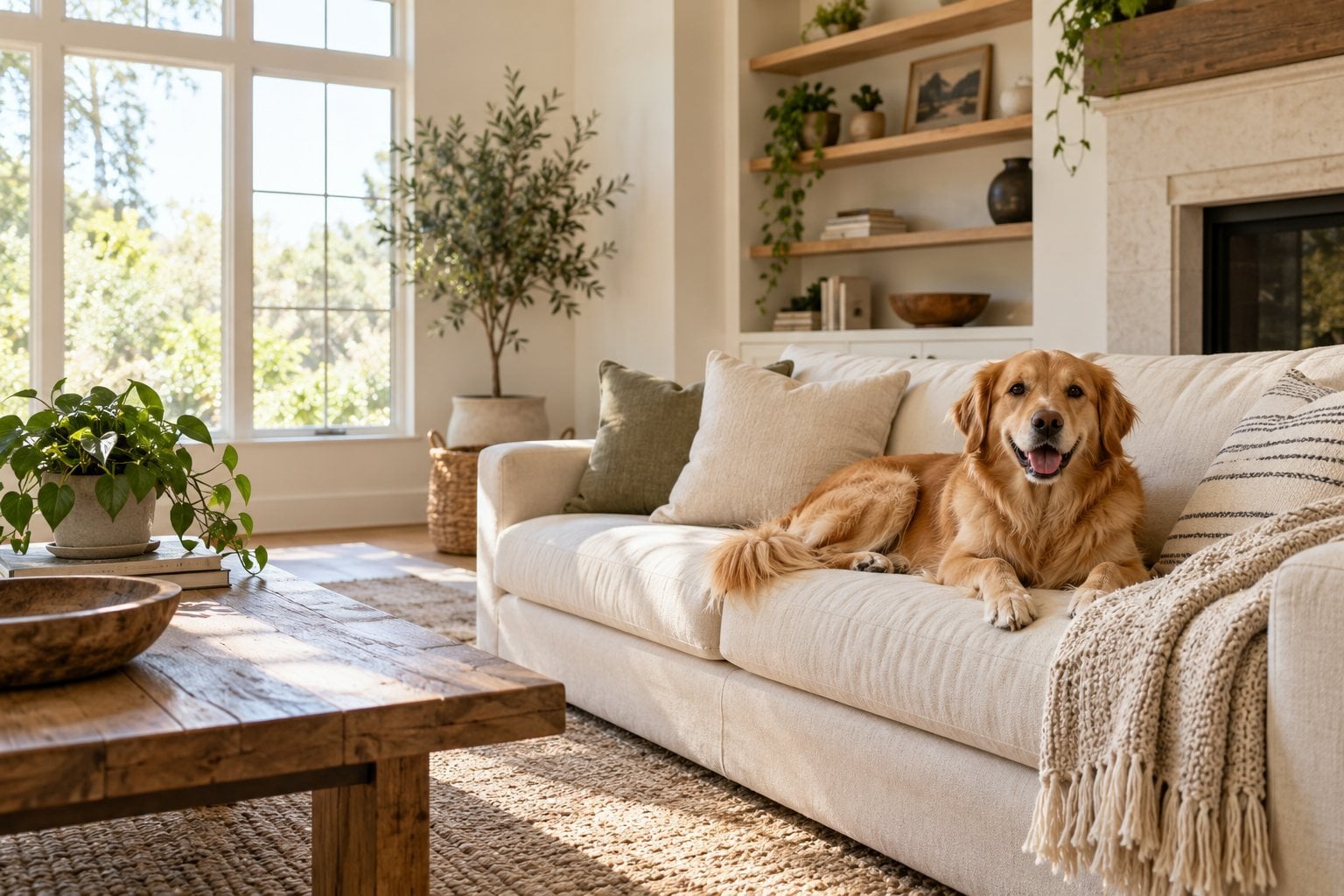
Your pets have made your house a home. Now it's time to make sure buyers can picture it as their own.
Pet odor registers within seconds of opening the front door, before anyone notices your updated kitchen or the afternoon light. Once buyers smell it, they stop picturing their life in the home and start estimating repair costs, usually well above the real number. The good news: it's solvable, and usually for far less than a price reduction.
The Short Version
- Find every spot with a UV blacklight. Old urine glows, even when you can't see or smell it.
- Treat urine with an enzymatic cleaner. Regular cleaners and steam can lock the smell in.
- Check under the carpet. If urine reached the pad, replace it. Cleaning won't fix it.
- Clean the air: new HVAC filter, washed vents, laundered fabrics.
- Never cover it up with air fresheners or candles. Buyers notice, and wonder what you're hiding.
- Start 4–8 weeks before listing. Most homes need $80–$250 in DIY supplies; bigger fixes are in the budget guide.
Jump to:Sniff Test · Step-by-Step Plan · Dos & Don'ts · Costs · Listing Timeline · Before Each Showing · FAQ
Quick Check: Do You Have a Pet Odor Problem?
After living with a smell, your nose stops noticing it. Answer honestly. If you check even one box, this guide is for you.
- ☐Guests or friends without pets have mentioned a smell, or gone quiet when they walked in.
- ☐A room smells stronger on warm or humid days.
- ☐There have ever been accidents on carpet, even ones you cleaned up.
- ☐Your pets sleep on furniture or carpeted floors.
- ☐There's a litter box inside the living space.
- ☐You haven't changed the HVAC filter in 3+ months.
- ☐A previous owner had pets. (Old urine can hide under carpet for years.)
The best test: ask your agent or a friend without pets to walk through and tell you what they smell, room by room.
Why the smell keeps coming back
- Urine is the main culprit. Dried urine leaves uric acid crystals that water won't dissolve, and humidity reactivates them. That's why a room can smell fine in January and sour on a warm showing day.
- Dander and hair settle into carpet, upholstery, and ductwork, then recirculate every time the HVAC runs. Buyers with allergies may start sneezing within minutes, even in a home that smells clean.
- Skin oils leave a film on walls, door frames, and baseboards where pets lean and rub.
- Litter boxes and pet beds saturate the air and surfaces around them.
The Step-by-Step Plan
The rule: remove the source, don't mask the smell. Work in this order, from the floor up.
Phase 1: Find it
1. Scan with a UV blacklight ($15–$30). In a dark room, sweep floors, baseboards, and lower walls. Old urine glows yellow-green. Mark each spot with painter's tape so you can treat it later. Check the whole house, not just your pets' favorite spots.
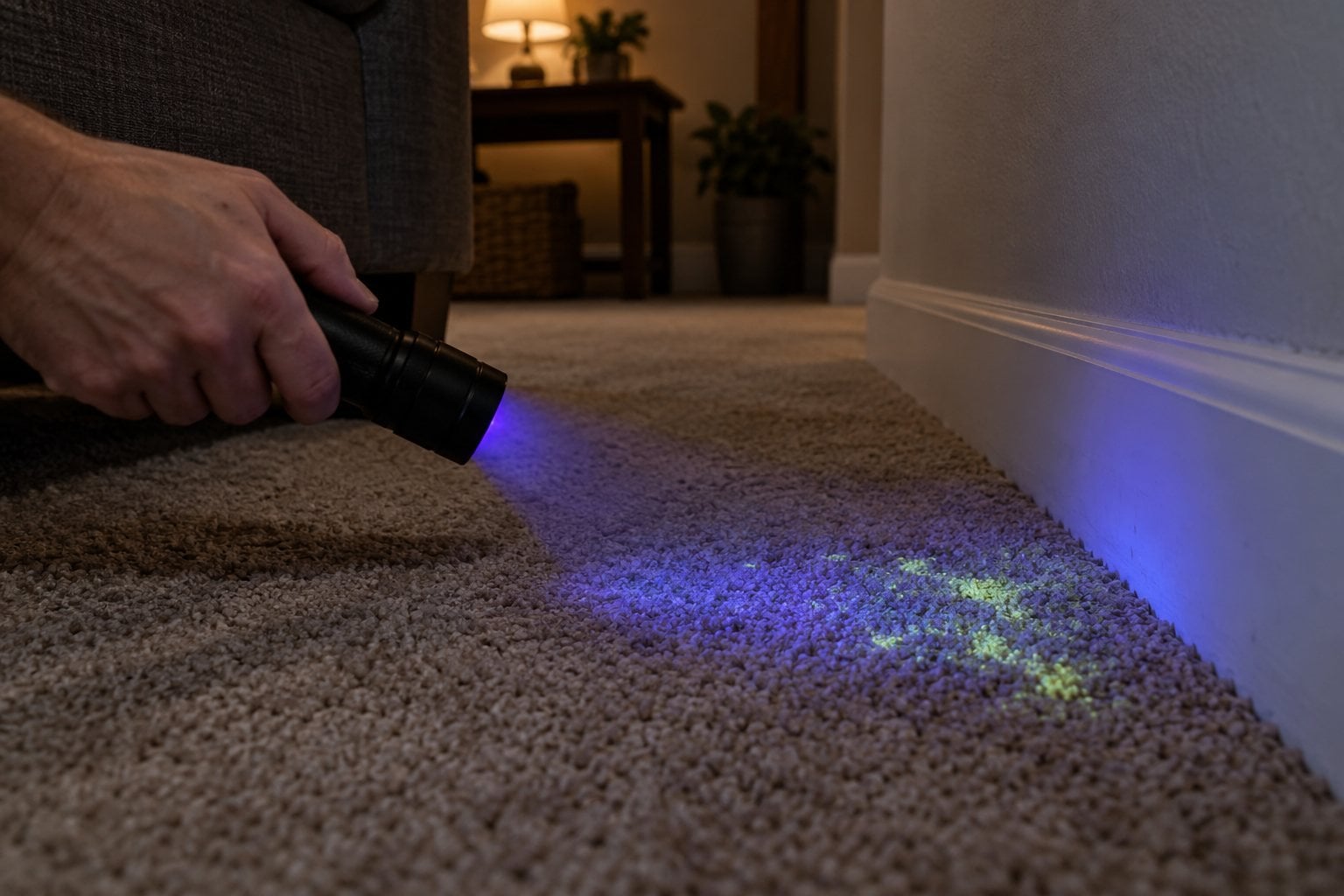
Under a blacklight, old urine stains glow, even ones that look clean in daylight.
Phase 2: Remove it
2. Treat urine with an enzymatic cleaner. Enzymes break down the uric acid that regular cleaners leave behind. Soak each spot as deep as the urine went, follow the label's wait time, and let it dry completely. Repeat if the smell returns.
3. Check the carpet pad. Professional carpet cleaning with a pet enzyme pre-treatment handles light odor. But if urine soaked through to the pad, surface cleaning won't fix it. Replace the pad (or the carpet; new flooring is also a selling point).
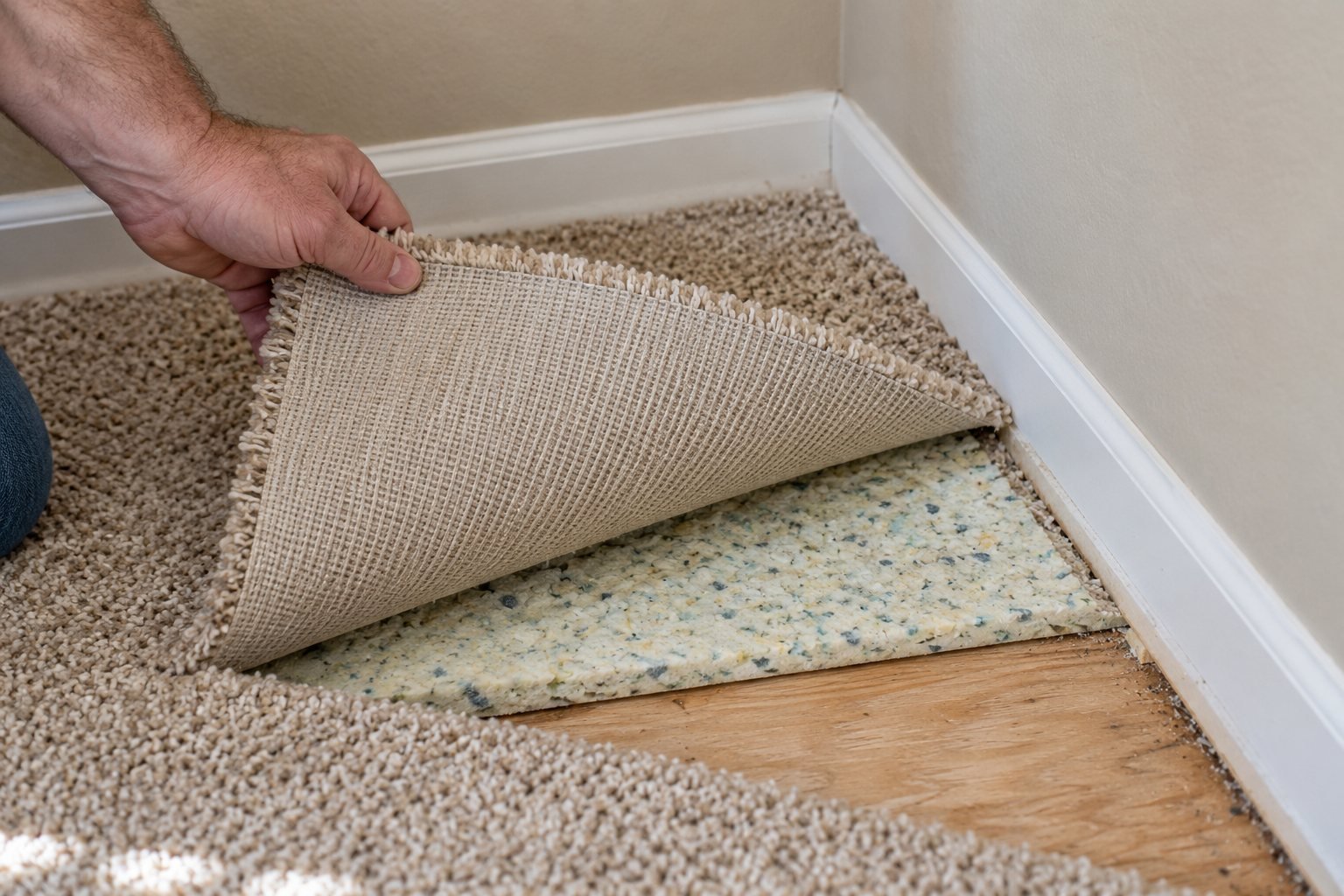
Pull back a corner near a problem spot. If the pad is stained or smells, it needs to go.
4. Wash walls and trim. Use a mild degreaser where pets lean or rub.
5. Launder or remove soft goods. Wash curtains, pillows, throws, and pet bedding. Professionally clean upholstery, or store heavily affected pieces off-site.
6. Relocate the litter box. Move it to the garage or laundry room and replace old boxes; plastic absorbs odor.
Phase 3: Seal and refresh
7. Seal what can't be cleaned. Once subfloors, baseboards, or drywall are clean and dry, seal them with a shellac- or oil-based odor-blocking primer before new flooring or paint. Regular paint alone lets the smell bleed through.
8. Clean the air system. Install a new pleated HVAC filter (a higher MERV rating traps more dander) and wash the vent covers. Consider duct cleaning if you have heavy shedders.
9. Call a pro for severe cases. Odor remediation companies use hydroxyl or ozone treatments. Ozone is for professionals only, with people, pets, and plants out of the house.
10. Re-test. Close the house for a few hours, then repeat the fresh-nose walk-through, ideally on a warm day when odors are strongest.
Dos and Don'ts
✅ Do
- Start 4–8 weeks before listing
- Use enzymatic cleaners on urine
- Spot-test on hardwood, stone, and upholstery
- Let everything dry fully before sealing or painting
- Replace what's saturated; a new pad costs less than a price cut
- Aim for a neutral smell, not a scented one
- Ask your agent about disclosure if there's been significant pet damage
❌ Don't
- Use Febreze, plug-ins, or candles. They mask odor, don't remove it, and bother scent-sensitive buyers
- Use ammonia cleaners; they smell like urine to pets and invite re-marking
- Steam clean before treating urine; heat can set the odor permanently
- Mix bleach with other cleaners; it can release toxic fumes
- Paint without an odor-blocking primer
- Run an ozone machine yourself
- Trust your own nose
What It Costs
Every pet home needs the first two rows; the rest depends on what you find. Ranges are approximate; get local quotes before you budget.
| Fix | When you need it | Approx. cost |
|---|---|---|
| UV blacklight + enzymatic cleaner | Every pet home | $30–$100 |
| HVAC filters (several changes while listed) | Every pet home | $50–$150 |
| Professional carpet cleaning with pet treatment | Light to moderate odor | $150–$500 |
| Upholstery cleaning | Pets allowed on furniture | $100–$300 |
| Air duct cleaning | Heavy shedding or long-term pets | $300–$700 |
| Odor-blocking primer + repaint (per room) | Odor in walls or trim | $300–$1,000 |
| Carpet pad and carpet replacement (per room) | Urine soaked through | $800–$2,500 |
| Professional odor remediation | Severe or long-standing odor | $500–$2,500+ |
Not sure which row you're in? We'll do a no-pressure, honest sniff test and point you to the fixes that are worth it, and the ones that aren't. Email Jaclyn or call 541-600-3379.
Your Listing Timeline
| 6–8 weeks out | Fresh-nose walk-through and blacklight scan. Get quotes for carpet, paint, or remediation. |
| 4–6 weeks out | Enzyme treatments (repeat as needed). Replace pad or carpet. Prime and paint. |
| 2 weeks out | Professional carpet and upholstery cleaning. New HVAC filter, wash vents, launder fabrics. Move the litter box. |
| Listing week | Re-test with a fresh nose on a warm day. Pack away extra pet gear. Line up pet care for showings. |
| While listed | Vacuum daily with a HEPA vacuum, scoop litter daily, change HVAC filters every 2–3 weeks, and groom pets often. |
Short on time? Light odor can often be handled in a weekend. It's flooring and paint that need the full 4–8 weeks.
The 30-Minute Pre-Showing Checklist
- ☐Open windows on opposite sides of the house for a cross-breeze (20–30 minutes).
- ☐Run ceiling fans and set the HVAC fan to "on."
- ☐Scoop the litter box and take that trash outside.
- ☐Put away bowls, toys, crates, beds, and leashes.
- ☐Quick vacuum of high-traffic areas and pet spots.
- ☐Take your pets with you.
Pro tip: Many sellers board pets for the first two weekends on market, when showing traffic peaks. It also means you're never scrambling when a last-minute showing request comes in.
Frequently Asked Questions
Can't I just use air fresheners before showings?
No. Fragrance only masks odor, and buyers can usually smell both. A heavily scented house makes people wonder what's being covered up, and scent-sensitive or allergic buyers may cut the showing short. Aim for a home that smells like nothing at all.
My pets are house-trained. Do I still need to do this?
Probably some of it. Dander, hair, and skin oils build up in every pet home, and a previous owner's pets may have left urine under the carpet. At minimum, do the blacklight scan, change the HVAC filter, and get a fresh-nose opinion.
Should I replace the carpet or offer a credit?
If urine has reached the pad, replacing it before listing usually wins. Buyers tend to overestimate repair costs, and a credit doesn't fix the first impression at the front door. Talk through the numbers with your agent.
Do I have to disclose past pet damage?
Disclosure rules depend on your state and the specifics of the damage. If there's been significant pet damage, even if it's been repaired, ask your agent how it should be handled on your disclosure forms.
Is it safe to use an ozone machine?
Not as a DIY project. Ozone can harm people, pets, and plants, and it can damage some materials. Leave it to a professional remediation company working in an empty home.
The Bottom Line
Loving your pets and selling for top dollar aren't at odds. Find every source, treat it properly, replace what can't be saved, and stay fresh through every showing. Buyers will notice what you want them to: the light, the layout, and the life they could build there.
Selling a home with pets? We'll share our trusted list of local carpet cleaners, painters, and odor specialists, and do a no-pressure walk-through with an honest sniff test.
Jaclyn Oakland Real Estate · 541-600-3379 · [email protected]
Check out this article next